
Following the lifting of European and American economic sanctions, Myanmar’s garment industry is growing. Currently, Japan and European countries are placing the largest orders for garment shipments. Additionally garment exports also go to South Korea, China and America.
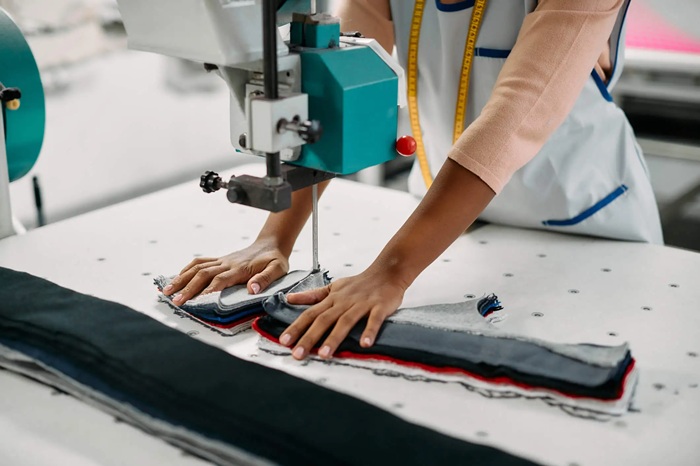
Myanmar’s garment industry is focused on cutting, making and packing, which is a basic contract garment assembly system that allows international garment companies to reduce their labor costs. The country is hoping to transition the domestic garment industry into a more value-added free on board system which puts international garment manufacturers in charge of not only cutting and assembling garments but also sourcing materials and shipping finished projects.
The main attraction for garment investors is the cheap labor. There are currently over 400 garment factories in Myanmar, with a labor force of more than 3,00,000 workers. Myanmar earned nearly $400 million from garment exports in the past three months. This is $100 million increase over the same period last year. Natural gas and agricultural products each comprise 25 per cent of Myanmar’s exports. CMP garments account for 16 per cent of exports, minerals eight per cent, fisheries five per cent, and forest, animal products and other products 21 per cent.

- 1
- 2
- 3
- 4
- 5
- 6
- 7
- 8
- 9
- 10
Intertextile Shenzhen 2026: Pioneering the Future of Textile Innovation
As Shenzhen cements its status as China’s premier hub for manufacturing, artificial intelligence, and startup cultivation, Intertextile Shenzhen Apparel Fabrics... Read more
The Devil Wears Prada 2 reflects fashion’s power shift, where consumers replace …
" " The release of The Devil Wears Prada 2 has sparked a debate far bigger than a Hollywood sequel. What... Read more
The 30-minute problem reshaping the $63 bn leggings market
The global leggings makers are racing to solve one of the apparel industry’s most expensive hidden problems: discomfort that appears... Read more
Why the resale explosion is failing to slow apparel production
The global apparel industry is confronting an uncomfortable paradox. The explosive rise of the resale economy, once viewed as a... Read more
Can India’s textile sector convert FTAs into global dominance?
What began as a cautious China Plus One sourcing strategy for global apparel trade, has now evolved into a full-scale... Read more
No More Easy Wins: Why global retailers are losing ground in China
China’s retail sector has entered a new phase, one defined not by aspiration, but by scrutiny. The long-standing advantage enjoyed... Read more
Resale overtakes fast fashion as vinted climbs UK Retail rankings
For the first time in decades, the British fashion market is witnessing a major change as resale platform Vinted secures... Read more
Shein Buys Everlane: Why sustainable fashion brands are losing the scale war
The acquisition of Shein by premium basics label Everlane marks a defining moment in the global apparel industry. What initially... Read more
Status, Rewired: Health, AI and experience are displacing heritage luxury
The global luxury industry is not facing a demand fall it is confronting a redefinition of value. As bellwethers like... Read more
Secondhand apparel enters asset era as global resale market targets $393 bn by 2…
Clothing is increasingly being treated not as a depreciating consumer good but as a tradable financial-like asset. As per ThredUp... Read more