

FW
Armenian Apparel spearheads a nearshoring realignment at Ready to Show Milano 2026
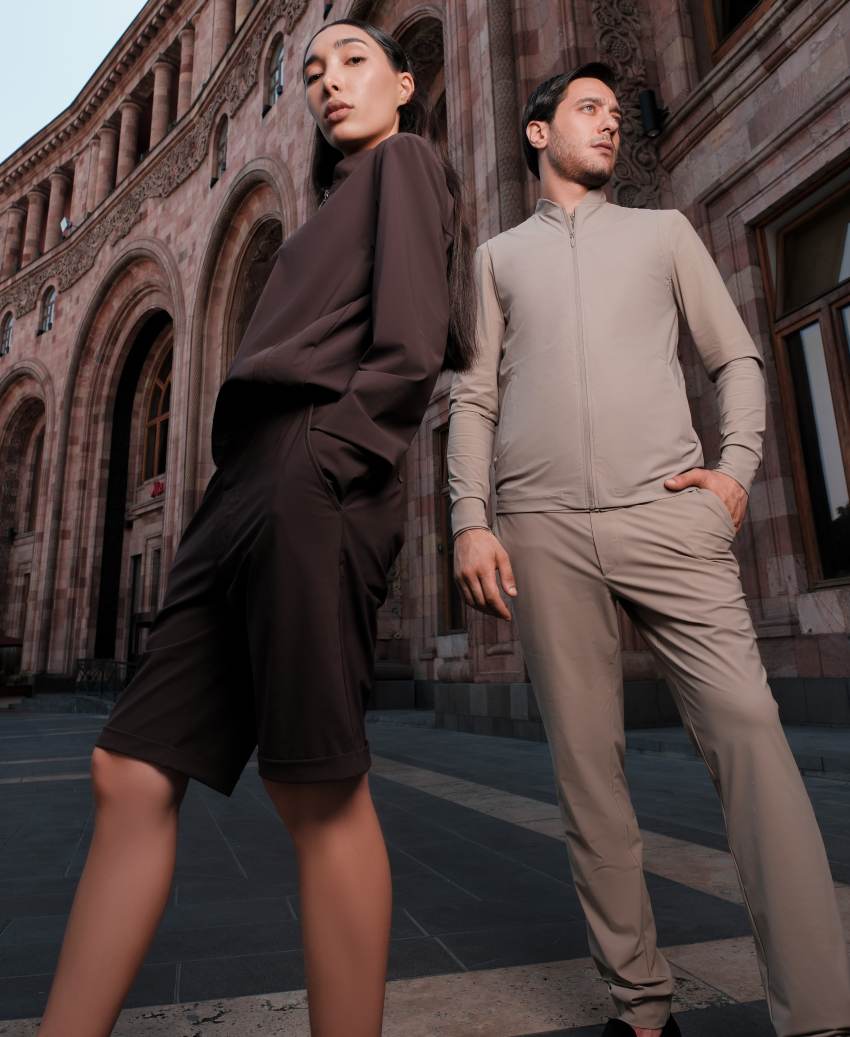
As the global fashion industry grapples with fragmented supply chains, compressed lead times, and escalating demand for low-minimum-order production, Armenia is stepping into the international spotlight. From September 12 to 14, 2026, a milestone delegation of 10 leading Armenian apparel manufacturers will debut at Ready to Show in Hall 10 of Fiera Milano-Rho, positioning the Caucasus nation as Europe’s newest agile, sustainable sourcing frontier.
Denim engineering and advanced eco-washes
Armenia's specialized denim sector blends traditional handcraft with cutting-edge finish treatments. Zakaryan spearheads this segment with high-grade denim programs distinguished by creative artisan washes. Complementing this craft-forward approach, N2005 focuses on precision garment engineering, offering complex custom-fit cuts and sustainable, eco-wash solutions tailored for eco-conscious European collections.
Structured tailoring and formal uniformity
Reflecting the broader market shift toward fluid tailoring and sharp executive apparel, KKF showcases Armenia's sartorial precision. The manufacturer specializes in structured men’s and women’s suiting, alongside high-specification corporate uniform programs that require rigorous consistency and strict European sizing standards.
Cut & Sew reliability and knitted essentials
Armenia's foundation in cut-and-sew manufacturing delivers streamlined private-label production across jersey, knitwear, and everyday essentials. Ritex operates as a dedicated assembly partner meeting stringent European quality metrics directly from its domestic manufacturing facilities. Lentex contributes comprehensive knitting capacity spanning hosiery, jersey, and seamless corporate apparel, while Alex brings adaptable contract manufacturing built to handle diverse customer requirements with agile scheduling.

Performance athleisure, casualwear, and utility workwear
Answering retail demand for lifestyle-driven activewear and durable uniforms, Armenian mills present versatile hybrid collections. Elina Armenia focuses on customizable casualwear and performance sports apparel for private-label development. Melante bridges loungewear and technical gear with an extensive portfolio spanning athleisure, sleepwear, homewear, and institutional workwear, supported by Tashirkar’s dedicated production of heavy-duty utility uniforms, comfort wear, and woven garments.
Closed-Loop circularity and sustainable home textiles
Emphasizing regional investments in circular design, Circullartex anchors Armenia’s sustainable supply chain capabilities. The mill utilizes regenerated and recycled yarns to manufacture eco-responsible underwear, t-shirts, polo shirts, jersey staples, and comprehensive home textile lines—ranging from bed linens to specialized towelings.
Strategic matchmaking on the Milan exhibition floor
The Armenian contingent enters a high-yield B2B procurement environment. Running concurrently alongside MICAM, MIPEL, TheOneMilano, and Lineapelle, Ready to Show 2026 deploys pre-engineered matchmaking that directly pairs exhibitors with nearly 500 vetted European buyers, department store heads, and private-label developers. By combining Armenia’s nimble capsule capabilities with Turkey’s nearshore speed and India’s global capacity, the September fair delivers a comprehensive sourcing matrix tailored for modern, trans-seasonal apparel manufacturing.
The driver of global fashion sourcing
Founded in 2001 by Tortona Design & Fashion under Georges Papa as Italy's premier contract clothing trade event, Ready to Show operates as the supply-chain engine room to Milan’s catwalks by granting international garment and textile manufacturers direct access to top European fashion houses and private-label buyers. Co-located within the Milano Fashion & Jewels hub at Fiera Milano-Rho, the autumn 2026 edition unrolls an expanded Eurasian corridor, uniting the historic debut of Turkish suppliers, India’s high-volume AEPC pavilion, and a 10-mill Armenian contingent to deliver a dynamic matrix of nearshore speed, circular production, and agile, low-MOQ sourcing.
Testex brings Audi Cabin to Intertextile Shanghai, redefining vehicle interiors with Oeko-Tex Baby-Safe Standards

In an unexpected crossover between high-end automotive engineering and ecological textile testing, visitors entering the sustainability showcase at Intertextile Shanghai Apparel Fabrics were greeted by a full-size electric vehicle. At the center of the Testex pavilion, marking the Swiss testing institute's 180th anniversary, sat the sleek AUDI E7X electric SUV, placed under the spotlight to demonstrate a major industry milestone: the world’s first automotive cabin to earn complete Oeko-Tex ecological certification.
For decades, Oeko-Tex labels have been synonymous with baby apparel, infant bedding, and skin-contact garments. However, rising consumer scrutiny around vehicle indoor air quality (VOCs), contact allergens, and toxic additives like formamides and PFAS has rapidly pushed textile standards into the automotive world. SAIC Volkswagen and AUDI used the Shanghai textile showcase to debut their certificate of compliance, officially validating their entire vehicle interior to Oeko-Tex Product Class I, the stringent tier reserved for newborns and infants up to three years of age.
Rather than certifying an isolated steering-wheel wrap or single seat cover, the qualification encompasses every touchpoint inside the cabin. According to documentation displayed alongside the vehicle, the certification encompasses PU synthetic leather, microfiber suede, natural leather, dashboard skins, seatbelts, carpets, and sewing threads under Oeko-Tex Standard 100 and Leather Standard. Every component was rigorously tested by Testex against hundreds of restricted and harmful chemical substances, ensuring no hazardous off-gassing, heavy metals, or carcinogenic colorants are present.
The booth, which also showcased the forthcoming Audi E5 Sportback, drew significant attention from technical textile millers, interior tier-1 suppliers, and fashion sourcers visiting Intertextile. Industry representatives noted that the crossover underscores a shifting paradigm in the materials sector: ecological safety is no longer confined to the runway or wardrobe, but is becoming a defining selling point in automotive luxury and consumer mobility.
Tailoring makes a comeback as men recast the suit around individual style
After nearly a decade of oversized hoodies, rubber-soled sneakers and workplace casualisation, tailoring is making a commercial comeback in global menswear. But the return of the suit does not mean a revival of the rigid corporate uniform. Instead, it reflects a change in why men buy tailored clothing. The global men’s suits market, valued at $51.74 billion in 2026, is projected to reach $68.16 billion by 2035. The growth is significant because the suit is now being detached from formal workplace requirements and repositioned as a vehicle for personal identity, craftsmanship and versatility. The shift is creating opportunities across luxury, premium and direct-to-consumer menswear, while forcing retailers to rethink everything from product architecture and sizing to inventory management.
Suit escapes the boardroom
The new tailoring cycle is being driven less by employers and more by culture. Sports, entertainment and social media have emerged as influential fashion platforms, with athletes using their public appearances to shape menswear trends. NBA guard Shai Gilgeous-Alexander’s pre-game tunnel appearances, Jude Bellingham’s tailored looks around European football and Lewis Hamilton’s fashion-led presence in Formula One paddocks are examples of the changing relationship between performance, celebrity and luxury apparel.
These settings have effectively become alternative runways. The tailored suit is no longer necessarily associated with the office, seniority or corporate authority. It can signify taste, creativity and status in settings where traditional business attire has little relevance.
Social media is pushing that transformation. Menswear hashtags on TikTok have generated more than 58 billion views, providing brands with an enormous discovery engine for silhouettes, styling ideas and emerging sartorial codes.
The resulting aesthetic is less rigid. Structured shoulders and conservative monochrome suiting are increasingly competing with relaxed trousers, pinstripes, open collars, softer construction and luxury sneakers.
Versatility is the retail proposition
For retailers, the most consequential change may be the move from complete suits towards modular wardrobes. An estimated 64 per cent of consumers prioritise versatile, multifunctional suits that can work across professional and social occasions, while 44 per cent seek customisable sizing or personalised tailoring before purchasing. These preferences are pushing brands to rethink the traditional jacket-and-trouser bundle.
Instead, jackets and trousers are being positioned as individual wardrobe assets. A tailored jacket can be paired with denim, knitwear or casual trousers, while suit trousers can function independently with shirts, polos or sneakers.
This modular approach increases the number of possible outfits while potentially increasing the number of products a customer purchases. For retailers, it also creates a more flexible merchandising model in which tailoring becomes part of the broader wardrobe rather than an occasional formalwear purchase.
The change has particular implications for premium menswear, where higher prices must be justified through versatility, fabric quality, construction and service rather than formality alone.
Zegna gives the luxury template
Italian luxury menswear house Ermenegildo Zegna Group offers a useful example of the transition. Rooted in textiles and formal tailoring, Zegna has increased its proposition around luxury leisurewear and softer, unstructured tailoring. Its Triple Stitch footwear and tailored separates reflect a strategy in which formal and casual wardrobes increasingly overlap.
The commercial logic is straightforward: instead of treating tailoring as a narrow formalwear category, luxury brands can use it as an anchor for a broader lifestyle ecosystem. The strategy also supports direct-to-consumer expansion and made-to-measure services.
Greater control over the consumer relationship allows brands to capture additional value through personalisation, alterations and repeat purchases, while strengthening customer retention.
Technology brings customisation downstream
Personalisation is no longer restricted to traditional bespoke houses. Mid-market and digitally native tailors are using AI-enabled sizing and digital fitting technologies to bring elements of made-to-measure into scalable retail models.
This has an important operational benefit. Better sizing can reduce returns, while more accurate demand signals can help brands limit excess inventory. For an industry grappling with markdowns and working-capital pressures, the commercial value of improved fit extends well beyond customer satisfaction.
The challenge is to balance customisation with speed and cost. Consumers expect a personalised experience but remain sensitive to price and delivery times. Brands therefore need technology that can deliver individualised fit without recreating the cost structure of traditional bespoke production.
Luxury faces a cost squeeze
The tailoring revival is not without risks. Premium wool and cashmere prices remain vulnerable to raw-material volatility, while global supply chains continue to face higher complexity and input costs. Brands are therefore experimenting with performance blends that introduce stretch, crease resistance and durability while attempting to preserve the tactile and visual qualities associated with luxury fabrics.
This creates a delicate proposition. The consumer wants the comfort of casualwear without losing the perceived authenticity of tailoring. Brands that compromise too heavily on fabric quality risk weakening the very premium positioning that enables higher prices.
From obligation to aspiration
The broader premium menswear market is growing at an estimated 3.66 per cent CAGR, but the more important change is qualitative. Tailoring is acquiring a new emotional role in the male wardrobe. The modern suit is expected to perform across multiple environments: the office, dinner, travel, social occasions and cultural events. This increases its addressable market while reducing dependence on conventional formalwear cycles.
For retailers, the opportunity lies in connecting tailoring with footwear, knitwear, accessories and casual separates rather than merchandising it as an isolated category. For luxury brands, made-to-measure and personalised services offer another route to deepen customer relationships. The important shift is therefore not simply that men are wearing suits again. It is that the suit has been stripped of its old obligation. Tailoring is returning not because men want to dress like executives, but because they want clothes that express who they are.
Heimtextil 2027 redefines performance standards for global textile manufacturers
Global textile manufacturers are accelerating research into multi-functional fiber architectures following the release of the Heimtextil 2027/28 trend framework. Centered around the theme of ‘Home-Maxxing - The Performance of Everyday Living,’ the upcoming Frankfurt showcase emphasizes fabrics capable of dynamic light regulation, acoustic dampening, and advanced air filtration. Mills are increasingly challenged to merge raw technical utility with consumer-facing comfort, bridging the gap between industrial contract specifications and high-end residential interiors. The market demands textiles that actively contribute to indoor wellness while maintaining absolute structural integrity under heavy operational use, states Olaf Schmidt, Vice President - Textiles and Textile Technologies, Messe Frankfurt.
Balancing transparency and tactility in sourcing
Supply chain strategies are shifting toward material honesty, highlighting visible construction elements such as reinforced seams, structural zips, and mechanical fasteners alongside hyper-tactile natural fibers. Procurement executives are prioritizing traceable wool, certified organic cotton, and bio-based synthetics to satisfy stringent European environmental compliance metrics. Industry analysts project, this convergence of measurable technical performance and sensory richness will expand profit margins for mills investing in specialized finishing technologies ahead of the January exhibition.
Driving sustainable product development
Operated by Messe Frankfurt, Heimtextil serves as the premier international trade fair for home and contract textiles, connecting over 2,600 global exhibitors. Spanning fibers, yarns, and smart textile technologies, the annual platform drives global sourcing strategies, sustainable product development, and multi-sector interior design standards.
RE&UP scales next-gen cotton to transform European private-label apparel
Textile-to-textile recycling is crossing a critical threshold as technology provider RE&UP integrates its advanced Next-Gen Cotton into major European apparel portfolios. By embedding circular-knit fabrics composed of 20 per cent recycled fibers and 80 per cent organic cotton into high-volume private-label lines, manufacturers are successfully proving that chemical and mechanical decolorisation processes can satisfy strict commercial performance metrics. Securing consistent, high-grade feedstock remains the baseline requirement for scaling sustainable operations across the continent, notes Andreas Reinhardt, Head - Supply Chain Integrity, Berlin-based Textile Metrics Group. This development addresses long-standing industry challenges regarding yarn durability and color fastness in recycled blends.
Overcoming economic barriers through demand pooling
With upcoming European regulatory frameworks enforcing stringent waste reduction targets, apparel brands are actively shifting procurement strategies to mitigate virgin material reliance. However, individual mid-sized producers frequently struggle to meet the minimum volume thresholds required by industrial recycling mills. To resolve this bottleneck, emerging initiatives like collaborative demand-pooling clubs are successfully aggregating purchase commitments across multiple fashion labels. Pooling our material requirements allows us to secure predictable pricing and stable long-term allocation without compromising garment specifications, remarks Elena Rostova, Senior Sustainable Sourcing Manager, European Apparel Group. Industry analysts project, these synchronized fiber commitments will accelerate capital expenditure in automated sorting and processing facilities.
Transforming waste into next-gen cotton and polyester
Operating as a specialized textile circularity technology enterprise, RE&UP transforms pre- and post-consumer waste into high-performance Next-Gen Cotton and Polyester. Backed by SANKO Holding's manufacturing expertise, the company targets aggressive capacity expansion across its Turkish facilities, aiming to establish scalable infrastructure for global fashion brands.
Eltex to optimize technical heat-setting operations with automated yarn tension control
Textile machinery innovator Eltex has launched its advanced ACT-MULTI system, bringing automated, individual yarn tension monitoring directly to the heat-setting stage. Essential for stabilizing synthetic and blended yarn architectures, heat-setting requires exact parameter control to lock in twist and bulk prior to downstream weaving, knitting, or tufting. Traditional processing lines frequently suffer from micro-variations in yarn tension across tunnels, leading to uneven dye uptake and structural defects in finished materials. By independently tracking individual ends on the input side of the processing tunnel, the ACT-MULTI ensures uniform mechanical stress relief. The system is engineered to automatically regulate each yarn against a predefined reference threshold, instantly halting operations if tolerances are breached," states Brian Hicks, CEO, Eltex.
Maximizing production efficiency and yield
The integration of real-time multi-channel sensors - available in configurations up to twelve channels with working ranges spanning 300 to 600 cN - allows operators to isolate faults instantly via dedicated LED indicators. This precise monitoring capability drastically reduces material waste during high-speed synthetic yarn production. Industry analysts project that mills adopting automated feedback loops will experience significantly lower operational downtime and superior batch consistency, addressing stringent quality compliance metrics demanded by global apparel and technical textile brands.
Targeting efficiency-driven growth
Operating as a specialized textile machinery manufacturer and TMAS member, Eltex develops advanced yarn break detectors and tension monitoring systems. Serving global technical textile, tufting, and weaving markets, the company targets sustained efficiency-driven growth, supported by decades of Swedish engineering expertise and manufacturing facilities in Ireland.
Sethani Creation strengthens position in men’s ethnic fabric supply market
Sethani Creation is strengthening its position in India’s men’s ethnic fabric supply chain as demand expands across kurtas, sherwanis and contemporary occasionwear. Based in Surat’s Padmavati Textile Market, the company supplies manufacturers, retailers and wholesalers with fabrics for traditional and fusion menswear. Its portfolio spans kurta, sherwani, Indo-Western, Modi Koti, Jodhpuri, embroidery and jacquard fabrics.
Wedding and festive demand widen fabric requirements
The opportunity extends beyond traditional festive dressing. Kurtas and coordinated ethnic sets have increasingly moved into everyday and semi-formal wardrobes, while wedding-led consumption continues to support premium fabrics and embellished surfaces. Sethani Creation’s multi-category sourcing model allows apparel businesses to procure fabrics for several silhouettes through one supplier, an advantage as retailers seek shorter procurement cycles and broader seasonal assortments.
Men’s ethnicwear is no longer restricted to a narrow festival calendar, says a Surat-based apparel sourcing executive. Retailers increasingly need fabric options that can serve weddings, celebrations and contemporary occasionwear, he adds.
Wholesale reach becomes the growth lever
Founded in 2007 by Mohit and Deepak Churiwal, Sethani Creation operates from Surat, one of India’s principal textile trading centres. The company states that it supplies customers across India and offers worldwide shipping, while maintaining a wholesale-focused model. BBusiness Standard+1
For the wider market, suppliers such as Sethani Creation stand to benefit as ethnicwear brands expand assortments and regional retailers seek differentiated fabrics without carrying excessive inventory.
Founded in 2007, Sethani Creation manufactures and wholesales men’s ethnic fabrics from Surat. Its key categories include kurta, sherwani, Indo-Western, Modi Koti and Jodhpuri fabrics. The company is focused on wholesale and broader distribution, but does not publicly disclose revenue or formal financial targets.
Unresolved tax discrepancies threaten India’s synthetic textile growth
India’s expanding man-made fiber sector faces critical working capital constraints following structural adjustments in indirect taxation. While recent fiscal revisions successfully unified finished apparel, fabrics, and yarn at a competitive 5 per cent Goods and Services Tax rate, foundational petrochemical inputs remain heavily burdened. Essential raw materials including Purified Terephthalic Acid and Mono Ethylene Glycol continue to attract an 18 per cent levy, establishing a persistent thirteen-percentage-point inversion across the supply chain. Industry assessments indicate that this disconnect blocks between Rs 2,000 crore and Rs 3,000 crore in unutilized input tax credits annually. Operating under a severe tax mismatch restricts liquidity for mid-sized mills trying to scale operations, notes Rajesh Mehta, President, Synthetic Filament Weavers Association.
Impacting MSME competitiveness and export margins
Micro, small, and medium-sized enterprises dominate the domestic processing landscape, leaving them disproportionately vulnerable to prolonged refund processing cycles and credit blockages. Although statutory refund mechanisms exist, administrative bottlenecks delay capital recovery, impairing the ability of domestic producers to invest in modern automated machinery and sustainable recycling infrastructure. Market analysts project, unless upstream polymer taxes align with downstream rates, Indian synthetic textile exporters will struggle to maintain global cost parity against regional competitors.
Targeting a large share of global textile trade
Comprising extensive spinning, weaving, and processing clusters across Gujarat and Maharashtra, India's synthetic textile sector supplies high-volume polyester and blended yarns to global apparel brands. The industry focuses on scaling technological capabilities, targeting a larger share of worldwide technical and fashion textile trade.
Global activewear, lingerie brands shift more production to India

As activewear and lingerie brands reassess their dependence on concentrated manufacturing bases in China and Vietnam sourcing patterns are changing across the world. Rising wages, tariff uncertainty, geopolitical risk and capacity constraints are pushing buyers to diversify production. India, traditionally identified with cotton-led apparel manufacturing, is emerging as a destination for higher-value synthetic garments, including sports bras, leggings, seamless underwear and technical performance wear.
The shift is significant because it is more than a relocation of basic garment orders. Brands are beginning to place technically demanding, margin-sensitive categories in India, signalling greater confidence in its synthetic textile capabilities, manufacturing flexibility and ability to support smaller production runs.
Cost is no longer just labour
India's advantage is based on total sourcing rather than wage costs alone. Factory labour in India is estimated at $2-$4 an hour, broadly comparable with Vietnam's $2.50-$4 range and below China's $5-$8. However, the more important differentiator is production flexibility. Indian manufacturers can frequently accommodate minimum orders of 50-500 units per style, compared to around 300-3,000 units in Vietnam and 1,000-5,000 or more in China. For activewear and lingerie brands operating through product drops, rapid testing and tightly controlled inventories, lower minimum order quantities reduce the financial risk of launching new designs.
Table: Landed-cost matrix and sourcing arbitrage
|
Country |
Avg. factory labor ($/hr) |
Typical MOQ (units) |
Synthetic raw material access |
Import tariff exposure (US/EU market) |
Lead time to port |
|
China |
$5-8 |
1,000-5,000+ |
Fully Integrated / Domestic |
High (Section 301/Duties) |
20-45 Days |
|
Vietnam |
$2.50- 4 |
300- 3,000 |
Heavily Imported (from China) |
Favorable (EVFTA / CPTPP) |
30-60 Days |
|
India |
$2-$4 |
50-500 |
Rapidly Scaling / Expanding MMF |
Moderate (FTAs Under Negotiation) |
30-60 Days |
This production flexibility is becoming valuable as brands move away from large seasonal commitments and toward shorter, data-led inventory cycles.
Synthetic gap narrows
India's biggest weakness in this segment has been its dependence on natural fibres. Performance apparel requires nylon, elastane, spandex and high-tenacity polyester, alongside sophisticated knitting, dyeing, finishing and bonding capabilities. That gap is now narrowing. Indian textile companies are investing in technical knits, four-way stretch fabrics, moisture-management finishes and synthetic yarn production. The government's $1.2 billion Production Linked Incentive scheme for textiles, combined with seven PM MITRA textile parks, is intended to accelerate investment across man-made fibre and technical textile value chains.
The business opportunity is substantial. India's textile market has been projected to grow from $165 billion in 2022 to $350 billion by 2030. For manufacturers, the objective is not simply to increase volumes but to capture more value per garment by moving into technically complex categories.
Suppliers are pulling brands
Global brands typically follow capable tier-one manufacturers rather than build sourcing networks from scratch. This gives large contract manufacturers an outsized role in India's transition. Sri Lankan manufacturers MAS Holdings and Brandix Apparel are examples of this supplier-led expansion. Brandix's 1,000-acre India Apparel City in Visakhapatnam integrates yarn, fabric, dyeing and garment production, creating a vertically coordinated manufacturing ecosystem. MAS has also expanded its technical manufacturing presence across southern India.
Such facilities matter because activewear and lingerie require far tighter quality controls than conventional apparel. Elastomeric recovery, compression, seam performance, colour consistency and bonding accuracy can determine product performance and consumer satisfaction. Integrated parks can reduce dependence on fragmented suppliers while making compliance, traceability and quality assurance easier for global buyers.
Indian players upgrade
Domestic manufacturers are simultaneously moving up the value chain. Gokaldas Exports has increased its capabilities in complex apparel through acquisitions and new manufacturing capacity, positioning itself for sophisticated export orders.
Page Industries is another example of India's intimate-apparel manufacturing depth. As the exclusive Jockey licensee in South Asia, it has developed large-scale production capabilities and operational expertise in underwear and related categories. The combination of international contract manufacturers and domestic champions creates a broader supplier ecosystem. This is important for Western buyers seeking alternatives to concentrated sourcing in East Asia without sacrificing scale or compliance.
Tariffs remain the hurdle
India's manufacturing proposition, however, is not without disadvantages. China and Vietnam retain denser ecosystems for trims, technical components, specialised machinery and synthetic inputs. Vietnam also benefits from preferential access to European markets through the EU-Vietnam Free Trade Agreement.
Indian garments can face standard Western-market duties of roughly 8-12 per cent, depending on product and market. Consequently, a lower factory cost does not automatically translate into the lowest landed cost.
Trade policy therefore becomes central to India's competitiveness. Negotiations with major markets, including the UK and European Union, and investments in port infrastructure could determine how quickly manufacturing gains translate into export growth. The government's ambition to reach $100 billion in annual textile exports by 2030 will depend partly on reducing these external cost disadvantages.
Decathlon shows the way
Decathlon shows how India's role is evolving from local supplier to strategic sourcing base. The French sporting-goods retailer has increased domestic manufacturing across apparel and other product categories, while seeking to source a growing proportion of products sold in India locally.
The significance lies in the export dimension. Indian suppliers are being integrated into Decathlon's wider international distribution network, allowing products manufactured in India to serve markets beyond the domestic consumer. This creates a stronger manufacturing proposition than simple import substitution. Once Indian factories meet global technical, compliance and quality requirements, they can become export platforms for multinational brands.
From backup to anchor
The emerging sourcing realignment does not mean China or Vietnam will lose their dominant manufacturing positions overnight. Their established supplier networks, infrastructure and technical ecosystems remain formidable advantages.
But the reasons of diversification are changing. India combines relatively competitive labour costs with smaller MOQs, a large workforce, growing synthetic capabilities and increasing investments in integrated textile infrastructure. For activewear and lingerie brands, these advantages address a growing need for flexibility as much as cost.
The deeper shift is therefore strategic. India is no longer competing only for cotton T-shirts and conventional apparel orders. As synthetic capacity, technical manufacturing and supplier sophistication grow, it is positioning itself for higher-value segments where speed, flexibility and supply-chain resilience increasingly influence sourcing decisions.
For global brands, India may not replace China or Vietnam. Instead, it is becoming the third pillar of a more diversified manufacturing architecture one designed less around the cheapest factory and more around balancing cost, risk, technical capability and inventory agility.
Beyond the Catwalk: Ready to Show 2026 charts new global sourcing frontiers in Milan

While the world’s fashion capitals prepare for the Spring/Summer 2027 runways, the operational engine room of European retail is convening on the outskirts of Milan. Running from September 12 to 14, 2026, Ready to Show returns to Fiera Milano-Rho, transforming Hall 10 into an epicenter of international manufacturing, direct-to-retail supply chains, and contract production. The event is anchored directly inside the broader Milano Fashion & Jewels hub, this edition signals a strategic evolution, unlocking fresh geographic frontiers and commercial synergies for global apparel sourcing.
A Historic Debut: The Turkish Pavilion
The headline development for the September 2026 edition is the historic entry of Turkish garment manufacturers, exhibiting at Ready to Show for the first time since the platform’s inception. Brought to the floor through an official partnership with Ren Sourcing, led by Sibel Ege, the dedicated pavilion directly addresses Europe’s demand for geographic proximity, compressed lead times, and flexible minimum order quantities. Renowned for their vertical integration, fine knitwear capabilities, and dynamic outerwear production, Turkish manufacturers offer European sourcing heads a nimble, nearshore alternative that balances high design agility with streamlined logistics.
Strategic synergy and pre-interfaced B2B Matchmakings
Positioned inside Hall 10, Ready to Show intersects with the broader Fiera Milano trade network alongside major concurrent industry showcases like MICAM, MIPEL, TheOneMilano, and Lineapelle. Rather than relying on unstructured floor traffic, the 2026 framework emphasizes curated commercial matchmaking. Targeted pre-show alignment connects exhibitors with nearly 500 pre-screened European buyers, department store sourcing directors, and private-label managers from leading international brands.
Bridging scale and craftsmanship
This curated commercial dynamic expands the event’s historic footprint. The debut of the Turkish contingent stands directly alongside established international manufacturing giants, most notably India’s expansive national pavilion organized by the Apparel Export Promotion Council (AEPC). The resulting dynamic bridges heavy, high-volume contract execution with regional artisanal craftsmanship, giving European buyers a single floor to negotiate diverse sourcing matrices.

Fluid menswear and modern tailoring
On the production floor, manufacturing exhibits directly mirror rapid shifts in consumer demand. In the apparel and structured tailoring zones, suppliers are prioritizing deconstructed suiting, fluidly tailored womenswear silhouettes, and smart private-label outerwear engineered to meet the lifestyle demands of hybrid work and travel.
Trans-Seasonal knitwear innovation
Knitwear manufacturing takes a pronounced leap forward through specialized, high-gauge technical production. International mills and knitting specialists are highlighting lightweight, highly breathable, and climate-adaptable yarns that cater to year-round wardrobe layering and versatile separates, moving away from rigid seasonal definitions.
Performance athleisure and hybrid activewear
Active sportswear and athleisure lines reflect the deep convergence of utility and casual fashion. Exhibiting manufacturers are delivering technical fabrics finished with everyday cuts, combining four-way stretch, moisture-wicking weaves, and seamless circular-knit technologies with refined aesthetics suitable for the high street.

Engineered accessories and finished components
Completing the production loop, the curated components and accessories segment provides direct links to high-grade hardware, footwear elements, and leather goods. These offerings supply private labels with the structural details, buckles, trims, and statement accents required to finalize comprehensive accessories collections for upcoming seasons.
Powering Europe’s Contract Sourcing Ecosystem: The vision behind the exhibition
Founded in 2001, Ready to Show is Italy’s pioneer professional contract clothing and outsourcing trade event, purpose-built to grant international apparel, knitwear, and textile manufacturers direct access to top European fashion houses, department stores, and private-label buyers. The fair is conceived and organized by Tortona Design & Fashion, a specialized Milanese consulting agency steered by industry veteran Georges Papa, whose operational footprints across global textile exhibitions and European trade facilitation span over four decades.