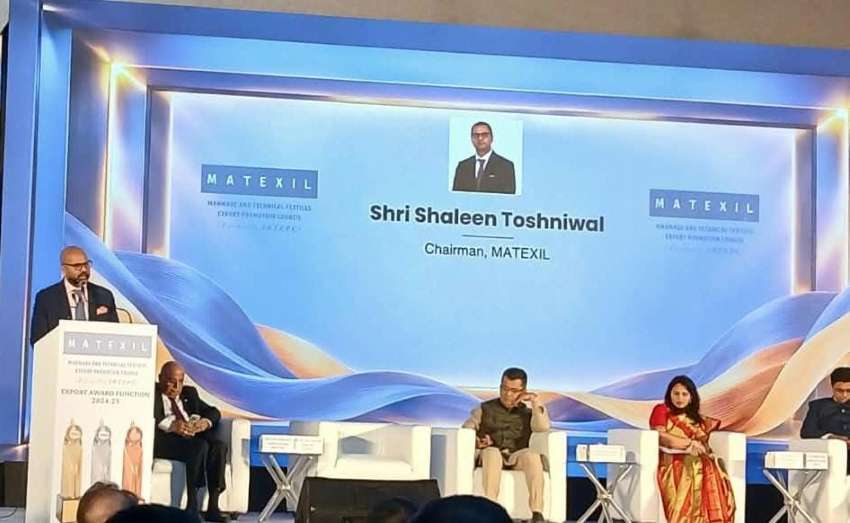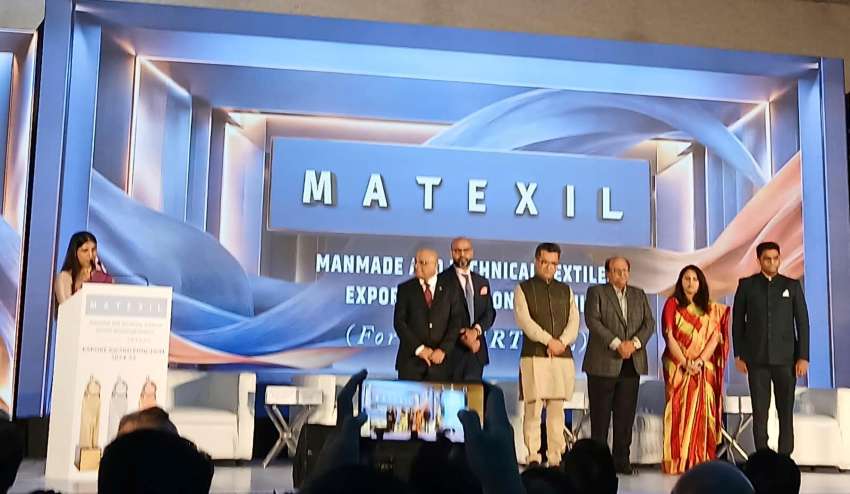


India’s textile and apparel sector, an ecosystem sustaining more than 50 million livelihoods, stands at an operational turning point driven by shifting global fibre demand, non-tariff trade barriers, and mandatory supply-chain traceability. Addressing industry leaders and exporters at the MATEXIL Export Award Function in Mumbai, Textile Commissioner Vrunda Desai outlined a comprehensive administrative blueprint to guide the transition from high-volume commodity shipments toward functional, high-value, and technical textile products. The policy pairs direct central investment incentives with rigorous compliance standards, requiring mills across the country to modernize shop floors, embrace circular recycling, and integrate into unified statutory digital databases.
Moving beyond apparel to 12 functional segments
Global fibre consumption is tilting steadily toward synthetic and engineered alternatives, characterized by escalating international demand for lightweight, high-performance, and technical textiles. Drawing from administrative experience as former Additional Director General of Foreign Trade (DGFT) North, Desai noted that domestic mills demonstrated resilient recovery following multiple years of post-pandemic market disruptions and international tariff turbulence.
The sector's growth trajectory must now widen beyond conventional cut-and-sew garmenting. Technical textiles represent an interdisciplinary convergence of chemical synthesis, advanced materials engineering, and high-performance fabrication across 12 recognized industrial segments. These applications extend deep into healthcare, heavy infrastructure, agriculture, aerospace, defense, and specialized packaging. With India's complete fibre-to-fashion supply chain, established manufacturing base, skilled workforce, and extensive MSME networks, the country is positioned to scale from its present export base, approximately 6 billion dollars in man-made fibre goods and 3 billion dollars in technical textiles; toward the national target of a 350-billion-dollar textile economy by 2030, anchored by 100 billion dollars in aggregate exports.
Capital Mobilization: From ATUFS to TEEMs and TEX-ECO
Direct government capital interventions have served as the principal catalyst for technological modernization across domestic processing and weaving clusters. The Amended Technology Upgradation Fund Scheme (ATUFS) delivered critical capital expenditure support to the sector, benefiting over 10,000 industrial units. Under ATUFS, a total central government subsidy disbursement of 2,776 crore rupees successfully catalyzed 53,000 crore rupees in total industrial investment. This represented an investment multiplier where every single rupee of state subsidy mobilized 19 rupees in private capital investment, enabling the installation of 6.7 lakh advanced plant and machinery systems and creating 3.6 lakh direct jobs. Technical textile units received an elevated subsidy allocation of 50 percent under the program, modernizing key operational segments across the country.
To sustain this momentum, the central administration is actively preparing the next generation of industrial support schemes. In response to industry representations for brownfield capital modernization, the Ministry of Textiles is formulating the TEEMs initiative to upgrade legacy weaving, processing, and garmenting factories, with a direct focus on traditional textile clusters. Complementing TEEMs is the upcoming TEX-ECO scheme, designed to incentivize circular production methods, fabric recycling, and environmentally responsible manufacturing. These interventions operate alongside the National Technical Textiles Mission, which supports applied research, specialized testing, and the translation of innovative patents from laboratories into commercial assembly lines.
To address global supply chain scale and logistics bottlenecks, the central government is rolling out seven PM MITRA mega textile parks. These integrated manufacturing parks will co-locate weaving, processing, laboratory testing, design, and logistics within a unified footprint, allowing manufacturers to reduce turnaround times and achieve global cost competitiveness. Concurrently, the Production Linked Incentive (PLI) scheme for textiles is entering its fourth application window, expanding funding access across man-made fibre apparel, fabrics, and technical textiles.
Decentralized technical infrastructure for MSMEs
Bridging the technological divide for small and medium enterprises remains central to the Office of the Textile Commissioner's administrative focus. Former Powerloom Service Centres have been restructured and converted into Integrated Textile Apparel Development Centres with expanded operational scopes. Rather than functioning merely as administrative outposts, these upgraded centers provide MSMEs with direct access to standardized fabric and yarn testing facilities, specialized technical skills training for shop-floor operators and supervisors, applied design and product development assistance, as well as critical market intelligence, international linkage networks, and procedural outreach. These hubs supply small and mid-sized enterprises with the technical capabilities required to exit low-margin commodity goods and manufacture engineered, value-added textile products.
Statutory Compliance: Mandatory TSRS filing and TIN numbers
Securing international market access under bilateral free trade pacts—such as the India-UK trade agreement and the India-EU FTA—requires absolute adherence to non-negotiable international compliance benchmarks. Global retailers are placing unprecedented emphasis on full supply-chain transparency, sustainability proofs, and rigorous alignment with international technical certifications.
Domestically, Desai delivered an explicit compliance directive regarding data transparency and digital governance. All textile enterprises holding a GST registration are legally mandated to submit their operational statistical returns through the office's revamped TXC-TSRS portal. Emphasizing that statistical compliance is a statutory obligation rather than an optional exercise, Desai warned that failure to submit mandatory monthly and annual filings would invite statutory penalties.
The TSRS platform has been streamlined in direct coordination with trade representatives, standardizing forms to mirror the financial disclosures already submitted by units in their GST returns. The portal links enterprise PAN records directly to GST identification numbers to establish an automated pipeline that can source operational data straight from the national GST grid.
Onboarding onto the TSRS portal assigns each manufacturing facility a Unique Textile Identification Number (TIN). This unique identifier will serve as the verified baseline credential required for enterprises to claim subsidies, trade incentives, and scheme benefits under all future Ministry of Textiles programs. Accurate statistical disclosures provide the verified data needed for policy formulation, funding allocation, and targeted export interventions.
Expanding the export base
Complementing domestic digital compliance, the Ministry of Commerce has introduced an export promotion scheme backed by an outlay of 25,000 crore rupees to provide trade finance support, market diversification resources, and compliance subsidies for emerging exporters. To guide non-traditional exporters into global supply chains, the Textiles Committee has deployed six dedicated Textile Export Facilitation Centres. Over their first five months of operation, these facilitation outposts have assisted approximately 1,000 first-time exporters with hands-on export awareness training, procedural documentation, and trade navigation.
Desai emphasized that the ultimate benchmark of the Indian textile sector will not be judged merely by raw volume expansion, but by product consistency, high value addition, regulatory transparency, and the global reputation of Indian engineered textiles.