
For decades, Bangladesh was the default answer to one question confronting global fashion retailers: where can large volumes of apparel be produced at the lowest possible cost? That equation is changing.
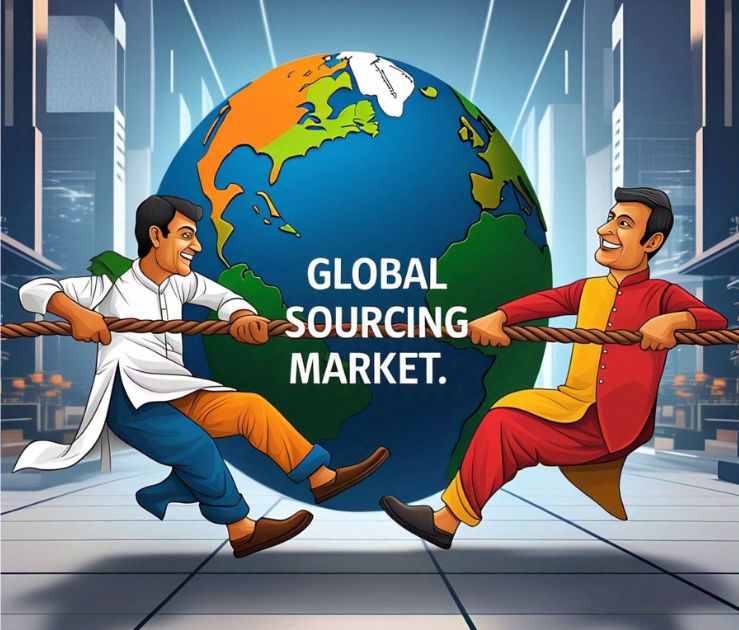
European fashion companies, including H&M Group, Inditex and Primark, are reworking their sourcing networks as energy shortages, rising factory overheads, tariff uncertainty and geopolitical supply-chain risks expose the limitations of excessive concentration in one production geography. This is not simply a story of Bangladesh losing orders. It is about the emergence of a more differentiated Asian sourcing, where India, Vietnam and Bangladesh serve different requirements.
Low-cost model faces new pressures
Bangladesh's apparel advantage was built on inexpensive manufacturing and preferential access to European markets under the EU's Everything But Arms regime. But that model is under pressure from two directions.
The country's industrial sector continues to contend with gas shortages, falling pressure and volatile LNG availability, affecting energy-intensive processes such as dyeing and finishing. At the same time, its graduation from least-developed-country (LDC) status raises questions over the durability of preferential market access.
For global retailers, the implication is straightforward: a low factory price is no longer sufficient if energy interruptions, longer lead times or future tariffs undermine the landed cost. The shift is visible in sourcing.
Table: Top global retailers sourcing pattern
|
Brand |
Average FOB import price per kg (2025) |
Sourcing strategy & geographic tilt |
Sourcing base changes in Bangladesh |
|
H&M Group |
$14.10 / kg |
Proximity production for complex knitwear; lowest price bracket basics in South Asia |
Active factory base reduced from 235 units (2020) to 189 |
|
Inditex (Zara) |
$14.95 / kg |
Nearshoring (Portugal, Morocco, Turkey) for trends; core woven lines in Asia |
Pays about 6% more per kg than H&M |
|
Fast Retailing (Uniqlo) |
$16.95 / kg |
Higher-specification core basics, technical fleece, and functional fabrications |
Selective, higher-compliance supplier relationships |
|
Primark / Associated British Foods |
$12.80 / kg |
Ultra-value volume programs; expanding commercial buying offices across India |
Diversifying jersey and woven contracts across South Asia |
The change in procurement pattern is particularly revealing. In 2021, H&M's average procurement price was 16 per cent higher than Inditex's. By 2025, the relationship had reversed, with Inditex paying roughly 6 per cent more per kg. One interpretation is that H&M's Bangladesh sourcing has become more concentrated in the cheapest basic categories.
H&M has also reduced its registered direct vendor base in Bangladesh from 235 manufacturing units in 2020 to 189, even while continuing to place an estimated $3-3.5 billion of annual orders there. The company says consolidation is intended to build a more resilient network of strategic partners while maintaining quality and compliance. The message is important: consolidation does not necessarily mean abandonment. It means fewer suppliers, greater scrutiny and a broader geographic risk-management strategy.
India can compete beyond factory cost
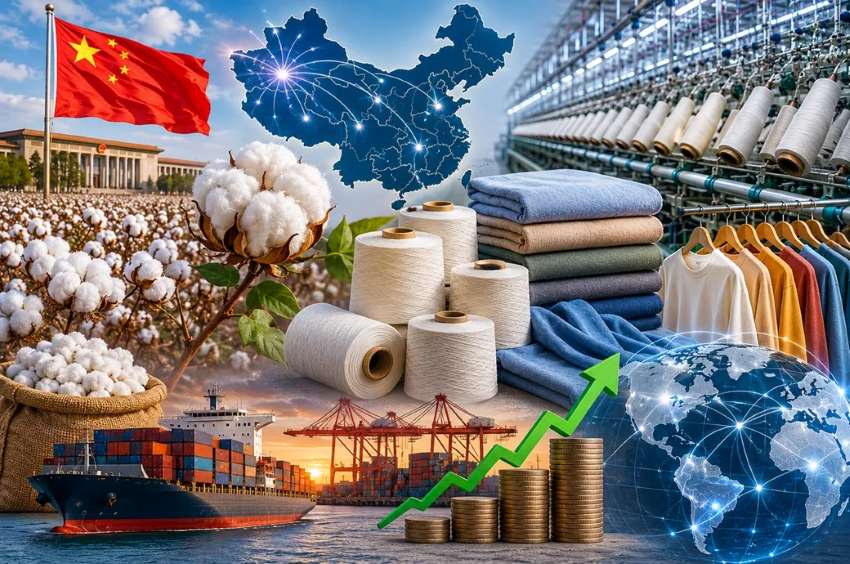
This is where India becomes strategically relevant. Indian clusters such as Tiruppur, Bengaluru, Noida and Surat offer global retailers something Bangladesh cannot replicate to the same extent: a deep domestic fibre-to-fabric ecosystem.
India's cotton production, ginning, spinning, weaving and garment manufacturing capabilities allow buyers to source across a relatively integrated value chain. That can reduce exposure to imported yarn and fabric, shipping bottlenecks and some of the currency and logistics risks embedded in cross-border sourcing. The opportunity is particularly significant in cotton knitwear, woven casualwear and mixed-fibre programmes.
The expansion of international buying infrastructure is another signal. Commercial buying agencies servicing value-fashion retailers are strengthening their presence in India, adding capabilities for quality assurance, product development and contract management.
For buyers, the calculation is about total landed cost rather than the FOB price alone. Generator fuel, energy interruptions, port delays and potential tariff changes can erase a factory-level cost advantage surprisingly quickly. Indian manufacturers therefore, do not have to win every order on price. They need to showcase that integration, reliability and shorter supply-chain risk can produce competitive economics.
Vietnam is taking the technical end
Vietnam is following a different trajectory. Its apparel and textile exports reached about $46 billion in 2025 and are tracking towards $48 billion in 2026. Its competitive advantage is concentrated in synthetic, technical and performance apparel. The EU-Vietnam Free Trade Agreement strengthens that position. Preferential access, combined with domestic textile production, allows Vietnamese manufacturers to meet rules-of-origin requirements for European exports. That matters because tomorrow's sourcing decisions will be shaped by the ability to demonstrate where fabric and garments were made, not simply where the final sewing occurred.
Vietnamese manufacturers have invested in domestic knitting and weaving capacity to meet these requirements, while logistics infrastructure and factory automation support shorter production cycles.
Asia's sourcing map becoming specialised
The emerging pattern is less about one country replacing another than about a three-tier division of labour. Bangladesh remains a formidable apparel manufacturing base, particularly for high-volume, price-sensitive cotton products. But energy constraints and tariff uncertainty make excessive dependence more difficult for international buyers to justify.
India's opportunity lies in integrated natural-fibre manufacturing and increasingly sophisticated garment programmes. Its domestic raw-material base gives it an advantage as retailers seek greater supply-chain control.
Vietnam, meanwhile, is strengthening its position in technical synthetics, activewear and performance apparel, where trade agreements and textile integration reinforce its competitiveness.
The larger lesson for global fashion is that resilience is becoming a procurement variable alongside price, quality and speed. The age of sourcing apparel primarily from the cheapest available production centre is giving way to a more complex model. Energy security, trade preferences, rules of origin, raw-material access and supplier diversification are now part of the same commercial equation.
For India, this creates an opportunity but not an entitlement. Capturing the next wave of global apparel contracts will depend on whether its manufacturers can convert raw-material integration into consistent quality, scale, speed, compliance and globally competitive landed costs.