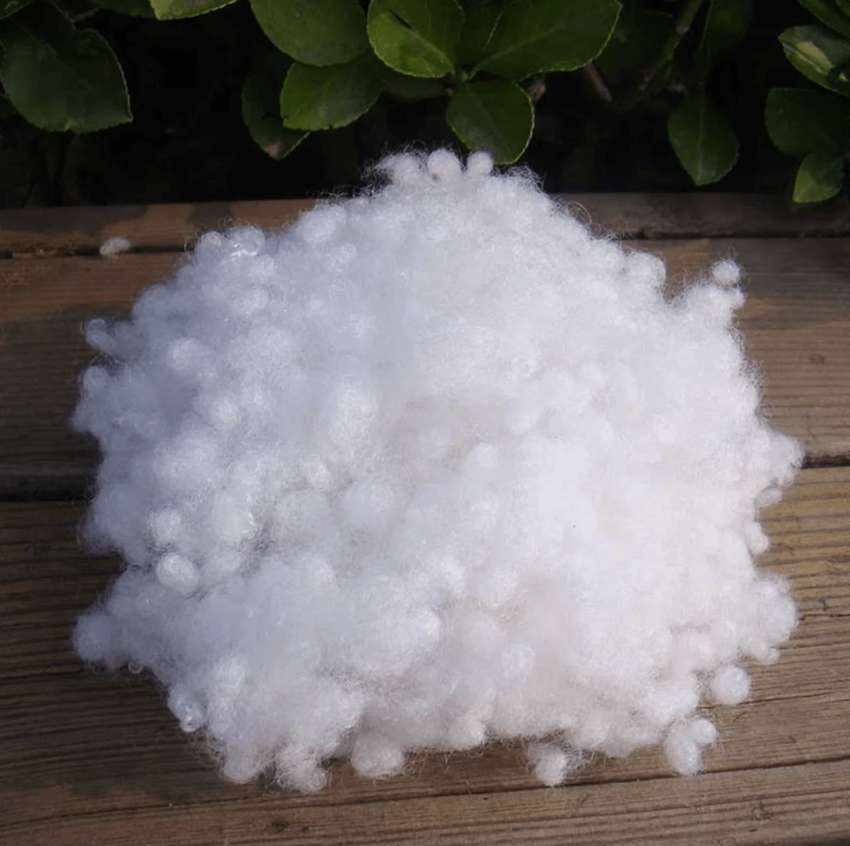


The apparel industry is facing an unusual reputational challenge: the growing association of polyester with low quality and excessive cost-cutting among younger consumers. Across social media platforms, younger shoppers are increasingly scrutinising garment composition, with tags and videos around fabric quality and polyester attracting hundreds of millions of views. Polyester is being used in online conversations as shorthand for cheapness, superficiality and poor craftsmanship.
For retailers, the shift is commercially important. Fibre composition, once largely confined to wash-care labels, is becoming part of the purchase decision itself. The change is particularly relevant for brands selling products at premium or aspirational price points, where consumers increasingly expect material quality to justify the ticket price.
Synthetics still anchor costs
The consumer backlash is hitting an apparel supply chain that has been built around synthetic fibres. As per Textile Exchange Materials Market Report, polyester accounts for roughly 54-59 per cent of global fibre production, with approximately 88 per cent of this synthetic output dependent on virgin fossil-based feedstocks.
Polyester staple fibre typically trades around $1.20-$1.50 per kg, closely linked to the prices of purified terephthalic acid and monoethylene glycol. Raw cotton lint, in comparison, averages $1.80-$2.20 per kg, while ring-spun, combed cotton yarn can reach $3.00-$3.80 per kg after accounting for ginning losses, cleaning and agricultural costs. This cost differential explains why polyester and poly-cotton blends have been central to mass-market apparel. Synthetic fibres provide predictable yields, lower processing losses and a cost buffer against labour inflation and freight pressures.
The cost of going natural
Moving from synthetic-heavy blends to 100 per cent natural fibres creates an immediate cost challenge for apparel companies.
Table: Fabric sourcing and unit economics comparison
|
Cost driver |
60/40 Poly-cotton blend |
100% Ring-spun cotton |
Variance |
|
Fabric Cost (per unit) |
$3.60 |
$5.80 |
+$2.20 (+61%) |
|
Trims & Accessories |
$0.80 |
$0.80 |
$0.00 |
|
Cut, Make & Trim (Labor) |
$4.20 |
$4.50 |
+$0.30 (handling/shrinkage) |
|
Freight, Tariffs & Duty |
$1.90 |
$2.10 |
+$0.20 |
|
Total Landed COGS |
$10.50 |
$13.20 |
+$2.70 (+25.7%) |
|
Wholesale Price (2.2x Markup) |
$23.10 |
$29.04 |
+$5.94 |
|
Gross Margin @ $68.00 MSRP (DTC) |
84.6% ($57.50) |
80.6% ($54.80) |
-400 bps |
The table shows the dilemma. Replacing a 60/40 poly-cotton blend with 100 per cent ring-spun cotton, increases landed COGS by $2.70 per unit which is 25.7 per cent. At a $68 direct-to-consumer selling price, the initial gross margin falls by 400 basis points. Across large merchandise, absorbing such an increase without raising retail prices could materially affect profits. Raising prices, meanwhile, risks weakening demand among consumers who remain highly price-sensitive.
Natural fibres can recover value
The initial margin penalty, however, does not necessarily translate into lower overall profits. Natural-fibre products can offer benefits further down the retail cycle, particularly where consumers are actively evaluating fabric quality. The transition from synthetic-heavy products can reduce problems such as pilling, static and dissatisfaction with tactile feel.
Analysis across contemporary European and North American retail networks say online return rates of around 18-22 per cent for 100 per cent natural-fibre apparel, compared with 28-34 per cent for synthetic-heavy equivalents. The resulting reduction in returns can save an estimated 120-180 basis points in reverse logistics and restocking costs.
Natural compositions can also support stronger full-price sell-through. The cited ranges put natural-fibre products at 68-74 per cent full-price sell-through, reducing dependence on the 30-50 per cent markdowns sometimes required to clear synthetic-heavy seasonal inventory. For retailers, therefore, the relevant calculation is shifting from fabric cost per garment to total product profits.
Recycling cannot fill the gap yet
The sourcing challenge becomes more complicated when brands attempt to replace virgin polyester with recycled alternatives. Textile-to-textile recycled polyester still is less than 1 per cent of global fibre production. Chemical recycling infrastructure remains constrained by financing, technology scaling and commercial capacity.
Much of the recycled polyester currently available commercially is derived from mechanically recycled PET bottles. This creates another supply challenge as textile manufacturers compete with food and beverage packaging industries for the same feedstock. Consequently, brands face a difficult choice: retain polyester for its cost and performance advantages, switch to more expensive natural fibres, or secure limited supplies of next-generation recycled materials.
Retailers rework the equation
The underlying shift is that consumers are assessing materials through the combined lens of quality, price and perceived integrity. For brands, this creates a potential margin trap. Polyester can reduce upfront production costs, but if consumers perceive a synthetic garment as poor value at a premium price, lower pricing power can erase the original sourcing advantage through weaker sell-through, returns and markdowns. This is particularly relevant for fashion retailers whose business models depend on high inventory turnover and disciplined full-price sales.
Inditex signals a broader shift
The sourcing strategy of Inditex shows how large retailers are preparing for the transition. The Arteixo, Spain-headquartered group, whose brands include Zara, Massimo Dutti and Bershka, generates annual net sales exceeding €35 billion. Inditex has committed to sourcing more than 50 per cent of its raw-material footprint from certified natural cellulosics and next-generation textile-to-textile recycled fibres by 2030.
The strategy points to a broader industry change. Polyester is unlikely to disappear from apparel manufacturing given its cost, durability and technical versatility. But its role may depend on whether the performance benefits can justify the material's perceived value at the retail counter. For apparel companies, the next phase of material strategy will therefore not simply be about finding the cheapest fibre. It will be about identifying the fibre mix that delivers the strongest combination of sourcing, consumer acceptance and profits.