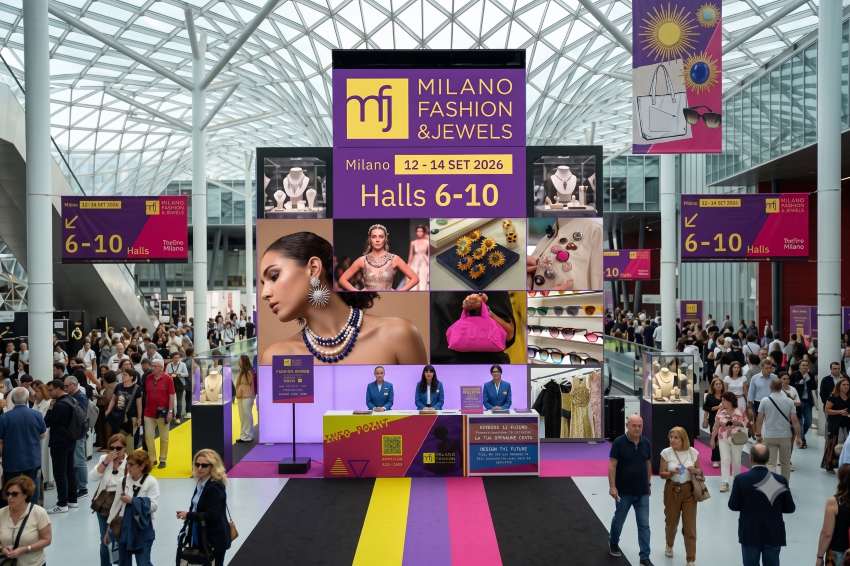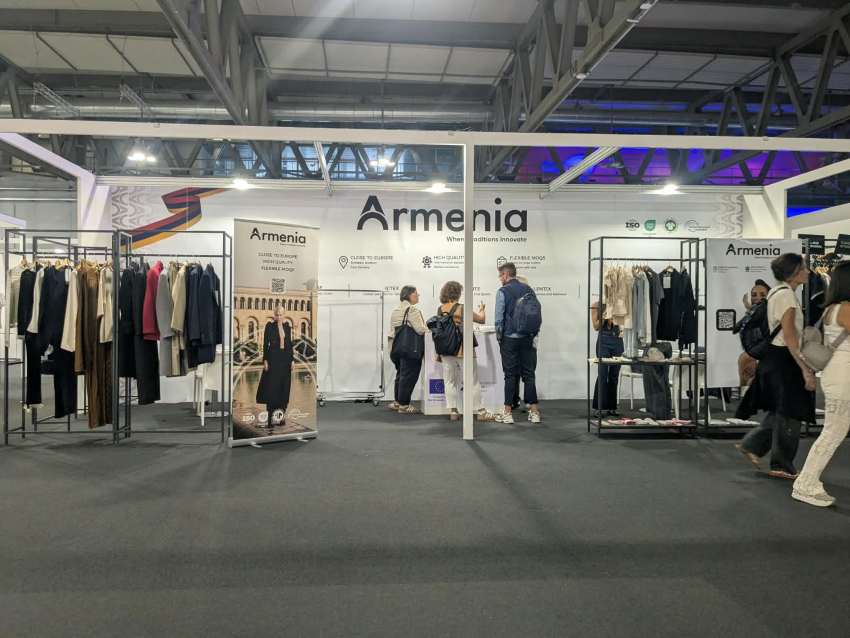

At the autumn session ( September 12-14, 2026) of Ready to Show inside Hall 10 of Fiera Milano-Rho, the Mediterranean basin’s most established garment manufacturing power put forward a redefined sourcing playbook. Organized within the Milano Fashion & Jewels (MFJ) trade matrix, the dedicated debut of Turkish apparel makers, spearheaded through an official partnership with Ren Sourcing led by Sibel Ege—signaled a structural evolution in how Mediterranean suppliers engage the European retail market.
Confronting persistent domestic cost inflation, elevated utility expenses, and tightening cut-and-make (CM) margins, Turkish exporters are moving away from basic commodity garment production. Instead, mills arriving in Milan presented a deliberate counter-strategy: leveraging high-gauge knitting machinery, proprietary fabric finishes, devoré burnout denim, and full-package design collections to defend their position as Europe’s premier nearshoring partner.
The nearshore dilemma and the shift to value
Turkey remains the European Union’s third-largest textile and clothing supplier, with overall sector exports targeting $25 billion in 2026 and more than 60% of apparel production flowing directly into European retail corridors. Supported by the EU-Turkey Customs Union, transit times to Southern and Central Europe average three to five days by road and short-sea shipping, giving Turkish mills a decisive logistical edge over East Asian competitors.
However, the macroeconomic ground beneath the industry has shifted. While currency depreciation in earlier cycles initially created an export price windfall, subsequent domestic inflation, sharp rises in statutory minimum wages, and higher energy costs have steadily eroded baseline price competitiveness.
Rather than chasing margins in low-cost commodity cutting—where volume orders increasingly shift toward lower-wage competitors or into cross-border industrial footholds in North Africa like Egypt—established Turkish mills are realigning around complex, design-intensive apparel.
Industry observers at Ready to Show noted that this realignment matches the structural preferences of the European market. Italian and European buyers operate with lower minimum order quantities (MOQs) than US department stores, placing far greater scrutiny on fabric hand-feel, structural tailoring, and supply chain transparency.
Exhibitors on the floor reiterated that when unit labor costs rise, survival depends on delivering products that commodity hubs cannot easily replicate.
Turkish Offerings: Intricate knits, artisanal denim, and tailoring
The manufacturing capabilities presented across the Turkish stands reflected this shift toward high-specification collections:
Fine-Gauge Knits and Long-Staple Luxury: In the circular knitwear segment, Çelik Makas, steered by 62-year textile industry veteran Mehmet Çelik, highlighted the commercial power of specialized spinning and proprietary knitting. The Istanbul-based mill showcased luxury mercerized cotton knits and engineered border fabrics created on advanced circular knitting equipment. Emphasizing raw-material rigor, Çelik detailed the company's reliance on 38-millimeter extra-long-staple Egyptian cotton yarn to achieve the luster and hand-feel required for high-end garments.
“We are using high quality… A very important thing is 38 millimeters of Egyptian cotton,” Çelik emphasized on the trade floor. “We are looking for very special private label partners because our quality is very high. It’s the same yarn, same quality, but circular knitting machines that make special borders and interlock.”
Operating both as a full-package contract manufacturer for global labels and the producer of its own domestic menswear line, Formenti, the mill illustrated how technical circular knits command wholesale price points between €22 and €35, insulating the enterprise from low-cost commodity competition.
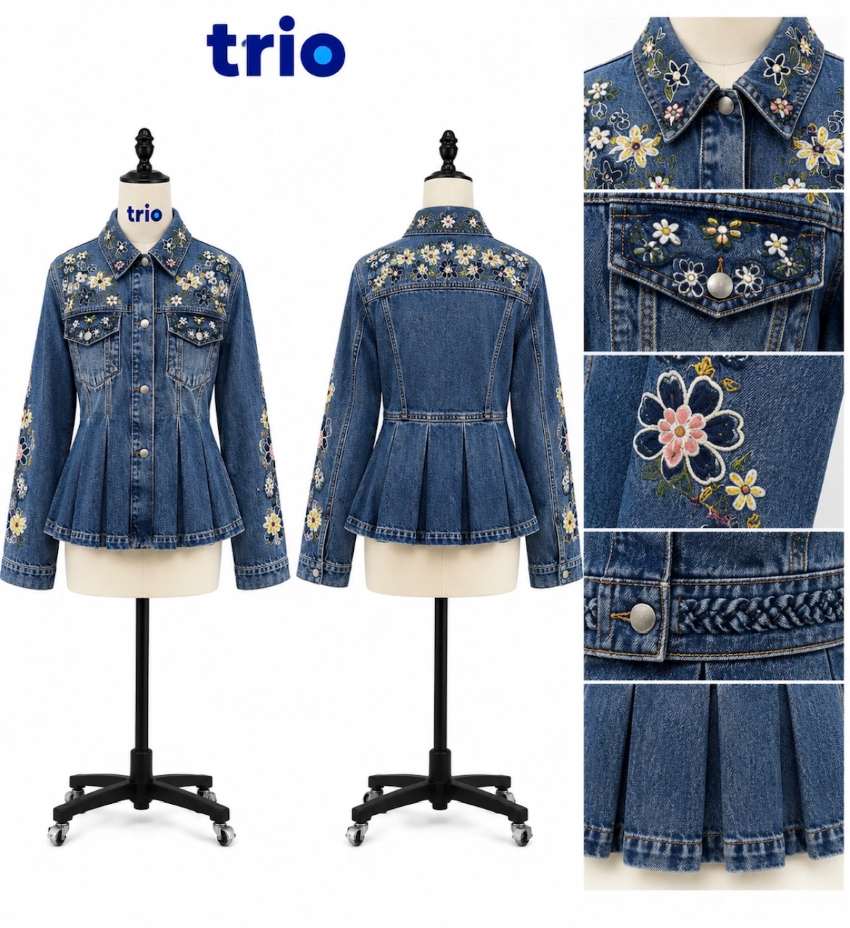
Artisanal Denim Engineering and Devoré Washes: Addressing the high-end casualwear market, Trio Denim, founded by Kemal Türk, demonstrated how surface artistry elevates classic bottom-weights. Working primarily with high-grade Turkish and Italian piece goods, Trio exhibited intricate devoré burnout textures, stone applications, and layered wash finishes engineered for premium international brands. Supplying leading contemporary labels including Frame and Jenni Kayne across both Europe and the United States, Türk emphasized that specialized wash facilities, in-house design development, and collaborative prototyping allow manufacturers to command export prices exceeding $40 to $45 per unit.
“We are going to concentrate more on premium garments like this,” said Türk. “Because of this, you need to have a network of suppliers, you need to have the know-how, and you need to have designers. We still can survive even in these circumstances, but you have to offer high value addition. It’s always a full package: our designer develops collections on the spot for the brand.”
Structured Outerwear and Clean Wovens: In tailored wovens, Idea Moda, represented by Emre Birol, demonstrated agility across wool blends, specialized linens, and double-face outerwear. Supplying high-profile North American and European accounts—such as Everlane and Los Angeles-based contemporary brands—the family-run enterprise highlighted its ability to handle versatile fabric palettes, sourcing fine wools from Italy alongside technical linens, while maintaining in-house assembly runs between 1,500 and 2,000 units per style.
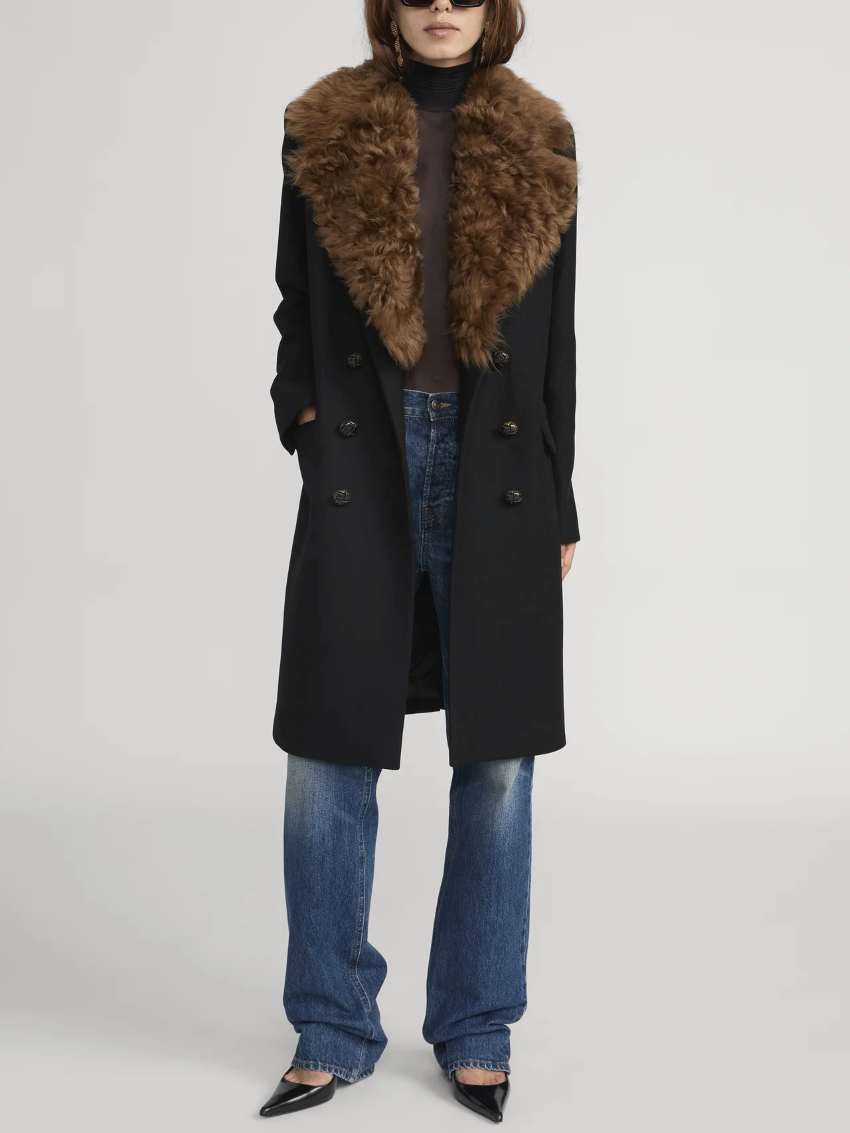
“The CM costs have increased a lot, but at our premium level, customers still appreciate the craftsmanship,” explained Birol. “General expenses and labor costs are high, but since we are a young family business, we are pushing hard and resisting the premium brands we can find.”
Integrated Vertical Operations and Performance Knits: Complementing specialized ateliers, large-scale vertical operations such as Simtex—operating integrated spinning, knitting, and dyeing facilities in Çorlu—demonstrated end-to-end technical production. From processing in-house air-covered polyamide yarns to finishing seamless activewear and shapewear for high-street groups like Bestseller and Urban Outfitters, their presence highlighted how vertical autonomy shields manufacturers from external component delays.

“Our company is fully integrated—we start from yarn production until the finished garment,” noted a representative at the Simtex stand. “We spin our own air-covered polyamide yarn only for our own products, knit in-house, and export 90% of our capacity. Activewear is the global trend, but you need integrated capacity to keep delivery stable.”
Export Specialists in High-Street Wovens: Women’s woven specialist Ünlü Tekstil, represented by marketing executive Zeynep Hündü, reinforced the enduring pull of Turkish manufacturing for major European retail networks. Supplying international retail groups—including the H&M Group's premium divisions COS and Arket, alongside brands such as Lacoste and Tommy Hilfiger—the company highlighted the continuous demand for structured pants, blazers, and heavy-construction outerwear that demand exacting European sizing and quality consistency.
“Mostly suits, pants, jackets, and heavy construction products have stayed in our country,” observed Hündü. “Even with cost pressures and inflation challenges, brands continue to rely on Turkish manufacturing for structured, high-specification ladieswear that requires technical precision.”
Supply Chain Integration: Cross-border sourcing dynamics
The exhibits also revealed a pragmatic shift in how Turkish garment makers manage raw material pipelines. While local mills provide a strong baseline in cotton and denim piece goods, Turkish manufacturers are operating as global material integrators. Exporters routinely import Italian wools, Portuguese technical blends, and long-staple yarns to build unique, design-forward capsules for European buyers.
Simultaneously, sourcing coordinators such as Sibel Ege highlighted a dual-track strategy. As domestic production overheads rise, Turkish industrial groups are actively procuring basic fabrics and setting up secondary assembly hubs in duty-advantaged production zones across North Africa, particularly Egypt.
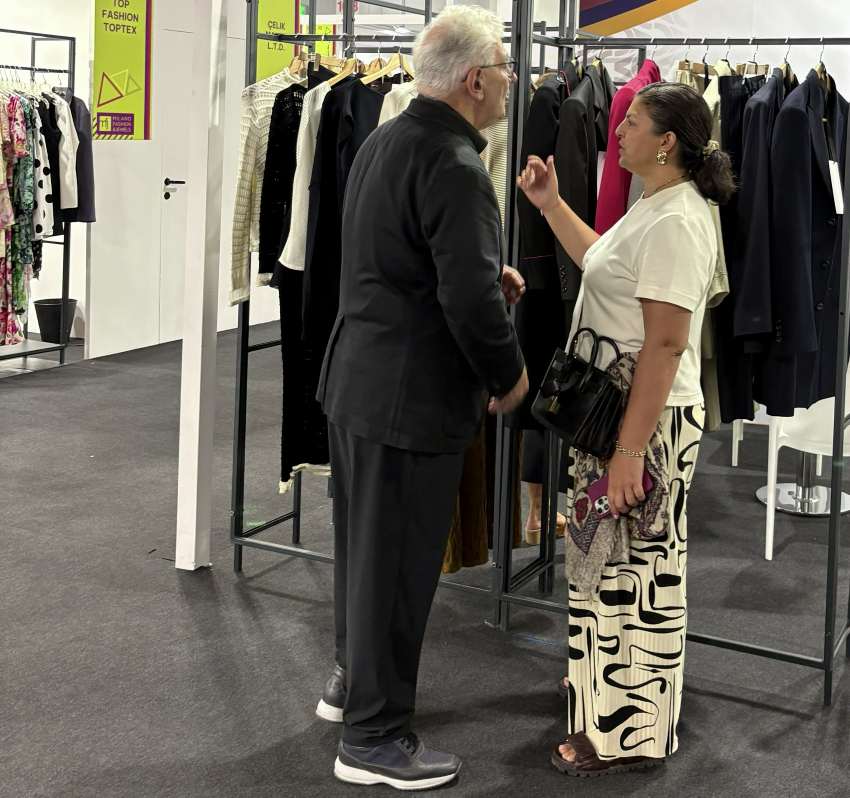
“The high taxes from everywhere, even from Europe now, force companies to look at the market situation,” Ege pointed out. “Cairo offers much more affordable production, and some Turkish companies are not only buying there but opening factories and investing in Egypt to utilize duty advantages for exports to the US and Europe.”
This hybrid footprint allows companies to direct basic, high-volume commodity programs through lower-cost regional facilities while reserving their domestic Turkish facilities for agile, high-value, and quick-response manufacturing destined for European retail floors.
Ready to Show and the Mediterranean trade corridor
Conceived in 2001 and managed by Milanese agency Tortona Design & Fashion under industry veteran Georges Papa, Ready to Show was established as Italy’s first professional international contract clothing and outsourcing trade platform. Engineered specifically to give non-EU garment manufacturers, knitwear specialists, and textile mills direct, unmediated access to European fashion houses, department stores, and private-label buyers, the platform operates as an operational supply-chain counterpart to Milan’s seasonal catwalks.
Staged inside Fiera Milano-Rho alongside the Milano Fashion & Jewels (MFJ) hub, the event runs concurrently with Italy’s flagship leather, footwear, and accessory salons—including MICAM, MIPEL, TheOneMilano, and Lineapelle. By combining open cross-hall navigation with targeted B2B matchmaking programs, Ready to Show serves as an indispensable bridge connecting international manufacturing capabilities with the commercial realities of European fashion retail.