
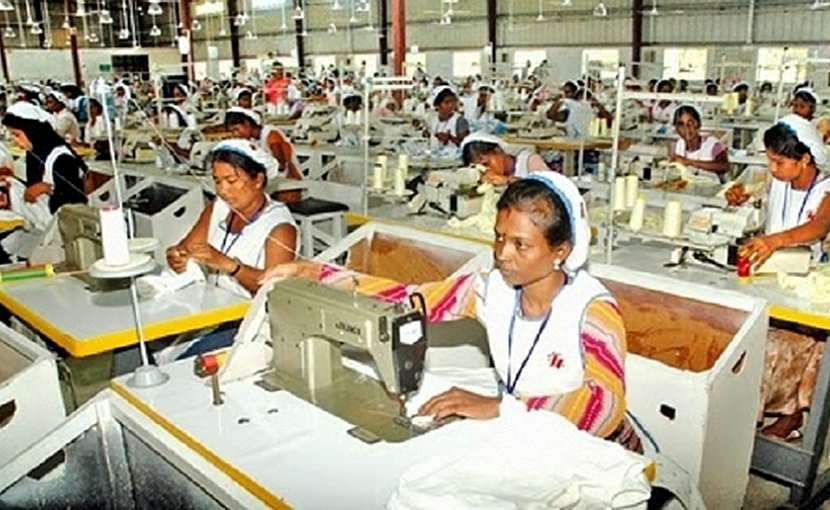
India and Sri Lanka are behaving less like competing apparel exporters and more like two linked stages of a single South Asian production system. TexPro data shows bilateral trade in intermediate textile inputs reached about $390 million in the first half of 2026. The model is straightforward: Indian mills provide fibre, yarn and fabric, while Sri Lankan manufacturers add specialised processing, garment engineering and assembly before products reach European and North American markets.
The shift is significant because it is occurring even as Sri Lanka's finished apparel and textile exports decline. Export earnings fell 6.02 per cent year-on-year to $2.259 billion in H1 2026, reflecting lower Western discretionary spending and continued inventory corrections. Yet the country's dependence on imported production inputs remained high.
Table: India-Sri Lanka trade pattern
|
Trade indicator/ component |
H1 2026 |
Bilateral share/operational dynamic |
|
Sri Lanka Total Apparel & Textile Exports |
$2.259 bn |
Down 6.02% year-on-year amid Western demand headwinds |
|
Sri Lanka Gross Fabric Imports |
$1.003 bn |
Core raw material intake for export-ready assembly |
|
India Share of Sri Lankan Fabric Imports |
28.52% ($286.1 mn) |
Dominant source for woven cotton, knits, and stretch blends |
|
India Share of Sri Lankan Yarn Imports |
34.44% |
Primary supplier of combed cotton and synthetic spinning yarns |
|
Bilateral Intermediate Input Trade Flow |
$390 million |
Combined input flow across fiber, yarn, and mill-finished fabric |
|
Key Investment Commitments |
Rs 8.8 billion ($92 mn) |
MAS Holdings expansion into Tamil Nadu industrial zones |
|
Typical Maritime Transit Window |
18 to 24 hours |
Tuticorin/Chennai to Colombo vs. 14–21 days from East Asia |
The numbers point to an important distinction: a dip in Sri Lanka's export value does not necessarily weaken its industrial relationship with India. In fact, pressure on final demand can make proximity more valuable as manufacturers seek shorter lead times, lower inventory exposure and greater flexibility in replenishment.
India supplies scale
The industrial logic is rooted in complementary capabilities. Sri Lanka has developed considerable expertise in high-value apparel, including intimate wear, swimwear and performance clothing, but has limited domestic cotton, spinning and weaving capacity. More than three-quarters of its apparel material requirements are estimated to be import-dependent.
India offers the missing upstream scale. Its large cotton base, extensive spinning capacity and growing synthetic-yarn industry give Sri Lankan manufacturers access to a broad range of counts, blends and technical fabrics without depending entirely on East Asian suppliers.
The geographical advantage is equally important. Shipments from southern Indian ports to Colombo can move within roughly a day, compared to substantially longer transit windows from major East Asian production centres. For fashion businesses operating with shorter buying cycles, the difference is not simply freight time it affects working capital, safety stocks and the ability to respond to late orders. This makes the corridor particularly relevant as global brands move away from purely lowest-cost sourcing towards supply chains that balance cost with speed and resilience.
Rules of origin add value
Trade policy could strengthen the model further. Preferential arrangements that permit regional cumulation can allow Indian yarn and fabric to be incorporated into Sri Lankan garments while preserving preferential access to destination markets, subject to the specific rules applicable to each agreement.
That creates an economic advantage that goes beyond bilateral trade. India can specialise in upstream production where scale matters, while Sri Lanka concentrates on higher-value garment engineering and manufacturing. Together, the two countries can potentially deliver a more competitive landed product than either could achieve through a completely standalone supply chain. For Indian textile producers, this creates an additional route to export value. Instead of competing only to sell finished garments, mills can capture value by supplying the intermediate materials embedded in Sri Lankan exports.
Capital follows the supply chain
The integration is also moving from procurement to investment. MAS Holdings, Sri Lanka's major apparel and manufacturing group, has committed Rs 8.8 billion, or about $92 million, to projects in Tamil Nadu. The proposed investment covers synthetic fabric engineering, wearable technology and automated manufacturing, with potential employment of about 7,000 people. That matters because it changes the relationship from buyer-supplier to co-location.
Brandix has already shown a similar model through its Brandix India Apparel City in Andhra Pradesh, where multiple stages of textile and apparel production operate within an integrated industrial ecosystem. Such clusters allow Sri Lankan apparel expertise, Indian manufacturing capacity and global-brand relationships to operate across a common regional supply chain. The emerging model could therefore evolve beyond Indian mills supplying Sri Lankan factories. Companies can distribute different stages of production across the two countries according to cost, skills, technology and market-access requirements.
Costs remain the constraint
The corridor is not without vulnerabilities. Sri Lankan manufacturers face relatively high industrial utility costs, particularly for energy-intensive dyeing, washing and finishing. Indian suppliers, meanwhile, remain exposed to cotton-price volatility, port congestion and fluctuations in yarn quotations.
Compliance is becoming another shared cost. Western regulations require greater visibility across the textile chain, from fibre origin and spinning through processing and garment manufacture. Digital product-passport, traceability and supply-chain due-diligence requirements will require Indian mills and Sri Lankan garment manufacturers to exchange reliable production, environmental and provenance data. The businesses that build this infrastructure jointly could gain an advantage over fragmented competitors.
From corridor to production platform
The Palk Strait relationship is consequently becoming more than a trade route. It is developing into a regional production platform in which India's scale in fibres, yarns and fabrics complements Sri Lanka's capabilities in technical garment manufacturing.
For Sri Lanka, India offers proximity and upstream security at a time when global apparel demand remains uncertain. For India, the relationship creates an avenue to move further up the export value chain by embedding its yarns and fabrics in globally marketed Sri Lankan garments. The opportunity is therefore not defined by the $390 million already moving across the corridor. Its significance lies in what that trade represents: the early formation of a two-country textile system capable of competing on speed, specialisation and supply-chain resilience rather than price alone.